

Longtime Lancaster Safety Coalition contributor reflects on group’s impact on fighting crime
When Dave Greiner thinks back on the first Lancaster Safety Coalition camera, he can’t help but be amazed at how far technology has advanced.
“It was connected to a VCR,” Greiner said, and police would have to go in and manually change the tapes inside of it. That camera, installed at the intersection of King and Lime streets in Lancaster city more than 20 years ago, was the first chapter in what Greiner described as “pages and pages of success stories” the Safety Coalition has authored since then.
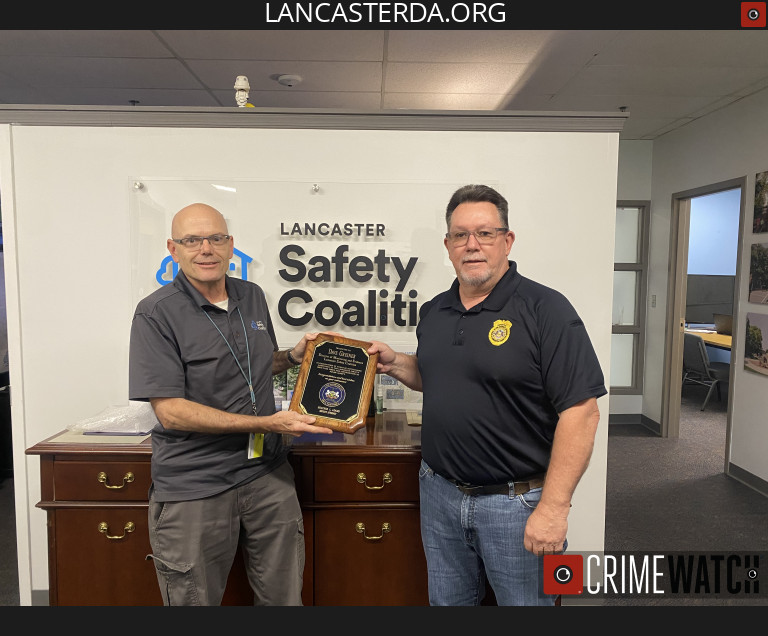
Greiner, who has been involved with the Safety Coalition in some capacity since its foundation in the early 2000s, retired from the group last month. Looking back on more than two decades of working with the group, both as a volunteer and as a paid employee, he said the Safety Coalition has come a long way.
What is now the Lancaster Safety Coalition was initially borne out of the Lancaster Crime Commission – a city board group focused on countering crime’s root causes that was chartered by then-mayor Charlie Smithgall. One of that group’s recommendations upon concluding its business in 2001 was the installation of a city-wide camera system to combat crime.
Just a few years after the group’s founding, they had acquired enough grant money to begin installing more cameras and hiring employees. Greiner, who had already volunteered with the Safety Coalition for several months by that point, was hired as a part-time camera operator in 2005.
By 2006, Greiner was a full-time Safety Coalition employee, manning long nightshift hours that didn’t end until well into the morning. It’s during those dark hours that the Safety Coalition makes some of its most forceful impacts.
“Truthfully, a lot of things happen after midnight under the cover of darkness,” Greiner said.
It was also around that time that the Safety Coalition began burning footage onto DVDs to share with local police, as well as sharing the live feeds of their videos with Lancaster County-Wide Communications to help reduce response times. Greiner was the one who was eventually put in charge of handling the chain of custody of footage that was handed over to police, as well as the hiring, training and scheduling of employees.
A large part of the group’s rapid expansion was in part due to the city’s existing fiber optic infrastructure, which the Safety Coalition was able to utilize for their own purposes. A large contribution from the Steinman Foundation helped add another 90 cameras, bringing the Safety Coalition’s total to 160 by 2010.
As the Safety Coalition’s successes grew, other law enforcement agencies began reaching out for help solving crimes they were investigating.
“We’ve worked with everyone up to the FBI,” Greiner said.
Now boasting 170 cameras, Greiner says somewhere between 60 to 65 percent of Lancaster city is monitored by the Safety Coalition. The group’s long-term goal is to continue that expansion, which requires additional fiber optic cable infrastructure.
Other goals include upgrading older Safety Coalition cameras – a project that began several years ago.
Older Safety Coalition cameras were limited, single-lens devices that could only face one direction. While their presence was invaluable, the limitations of the technology meant the cameras couldn’t always capture clear images of everything.
“We couldn’t get the bad guys to tell us where they’d commit their crimes,” Greiner joked.
New Safety Coalition cameras are multi-sensor, multi-lens, high-definition devices that can capture 360-degree views of city streets – making it more difficult for perpetrators of crimes to step outside of view.
The group’s cameras help with “a mixture of proactive and reactive work,” Greiner said, both by spotting potential crimes and helping dispatch officers to the scene before they occur, and in helping police solve crimes that have already occurred by looking back on old footage.
By one measure, the Safety Coalition has helped save the county millions of dollars by helping quickly secure guilty pleas that would have otherwise resulted in expensive trials, Greiner said.
And while Safety Coalition footage can and has helped solve “anything from a hit-and-run to a homicide,” it’s also been used to help clear individuals who were wrongly accused of crimes they didn’t commit, Greiner said.
The cameras have also been used to help find those who are a danger to themselves, including juvenile runaways. In one case, a dementia patient who had wandered off alone was able to be quickly located before he was injured thanks to Safety Coalition cameras.
Additionally, the cameras have been an invaluable resource in helping reduce police response times.